Event 1
The rooftop kiss in “Across the Rooftops”
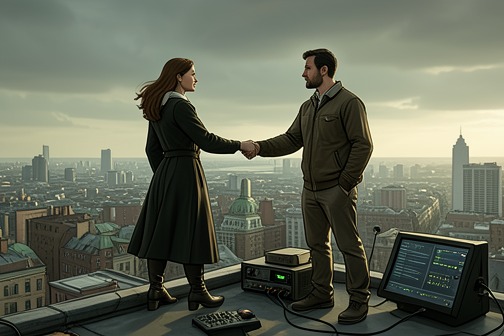
In “Across the Rooftops,” a rooftop kiss that begins with tentative contact and proceeds into a brief response ends when the woman gently pushes the narrator away. The encounter’s decisive meaning lies not in a dramatic rejection but in its small, unmistakable gestures: her fingertips against his chest, the two of them turning in opposite directions, and her quiet departure. The narrator remains on the ledge for hours, transforming a failed moment of intimacy into a suspended farewell to youth.
## Setting and Approach
Before the kiss, the narrator has already tested the possibility of closeness with a light touch. He lets his left hand emerge from beneath his buttock, moves it across the cool stone ledge, and places his fingers on hers. She does not respond. Her breathing remains even; she continues looking across the rooftops without turning towards him or speaking. The silence leaves the gesture unanswered rather than openly rejected, but it establishes the distance that the later kiss will not overcome.
The approach that follows is more decisive. After she turns towards him, the narrator leans in without pausing to let his thoughts interfere and puts his lips on hers. She responds to some degree: their lips part and their jaws move slowly. Yet physical participation does not become emotional transport. The kiss lasts perhaps half a minute, perhaps a little longer, but it does not take hold. The difference between a response and a shared desire is the scene’s central distinction.
## The Kiss and Its Ending
The boundary arrives through a notably slight action. The woman sets the tips of her fingers against the narrator’s chest and applies enough pressure to break the kiss. The narrator understands the touch immediately as final; its gentleness does not make it ambiguous. Rather than pull away in anger or explain herself, she uses a tiny bodily gesture to end their contact.
They turn away from each other almost at once. The narrator describes his heart as taking in the morning’s black poison, an inward collapse set against the restrained outward scene. The mismatch matters: the kiss ends softly, but its emotional consequence is severe for him. The encounter therefore holds two different experiences together, her controlled withdrawal and his sense of devastation, without suggesting that either changes what happened.
## The Rooftop Afterward
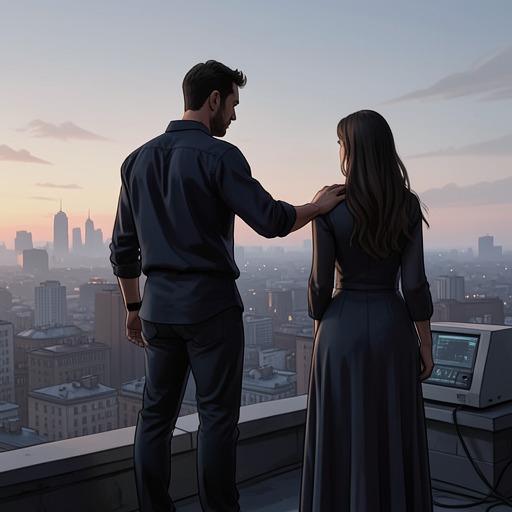
The setting sharpens the stillness after the kiss. It is midsummer; slanting sunlight comes through a sky of white clouds, while the church across the street casts a shadow over half of [Washington Street](entity:location-recall-location-a56b80fcb4bd). A pigeon flies beneath the church’s eaves, and the beat of its wings is the only sound to break the spell around them. The city’s ordinary details continue, but the narrator experiences the moment as sealed off from them.
The woman offers a half-smile that is also sorrowful, puts both palms face down on the ledge, and stands with languid deliberation. She tells him that she is going. He nods as coolly as he can manage, measuring his composure against the resilience of the small medieval city below him, able to withstand a siege. She climbs through the Velux window into the flat; after a few moments, the narrator hears its door turn and click, then her footsteps on the stairs. The sequence makes departure concrete: first the rooftop, then the interior door, then the diminishing sound of her steps.
## Separation and Narrative Meaning
After she leaves, the narrator stays seated on the ledge. He remains there as the sun rises higher and warms the stone and roof slates, and imagines sitting there for hours, months, and years. This exaggerated duration turns a brief encounter into a fixed point in memory: the summer seems to depart even as the day grows warmer. Eventually, the crowd’s sound dies, the music ends, and people trail home along the sleeping streets, with youth packed away and life about to begin.
The scene’s structure resists the usual promise of a romantic kiss. The narrator makes the move, the woman answers physically but does not share its apparent promise, and her light pressure ends it. His lingering does not reverse her departure or produce reconciliation; it records the gap between the intensity he feels and the limited connection the encounter establishes. By ending on the emptying city and the loss of youth, the episode gives a private disappointment the shape of a threshold: the kiss is over, she is gone, and the narrator remains behind as the night and its music recede.
Event 2
Jonathan’s confrontation with Aodhan at Do-It-Rite!
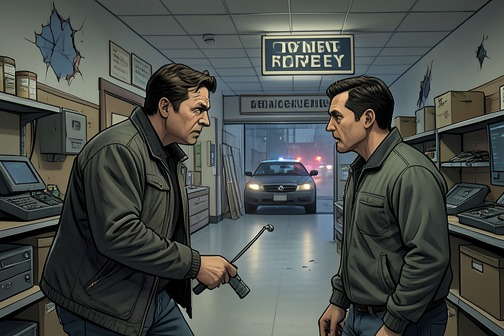
[Jonathan’s confrontation with Aodhan at Do-It-Rite!](entity:event-recall-event-jonathan-s-confrontatio-a7d584307a51) is a decisive collision between parental protectiveness and [Jonathan](entity:character-recall-character-jonathan-c07ebc6c5e21)’s recurring loss of control. In the store’s quietest aisle, he warns Aodhan against hurting [Ellie](entity:character-recall-character-ellie-82a8259ccbb9), then escalates from threat to physical aggression and damages the store’s sign. The episode ends with a squad car’s arrival, fulfilling the arrest foretold at the opening of the marriage narrative and turning Jonathan’s claim to be acting for Ellie into a public crisis.
## Causes and Setting
The encounter takes place in a Saturday shopping trip to [Do-It-Rite!](entity:location-recall-location-do-it-rite-c12da98a7e0d), where Jonathan finds [Aodhan McAdam](entity:character-recall-character-aodhan-mcadam-c83e6870d815) among the drylining accessories. Jonathan frames the conversation as an unusually candid moment: in the quiet aisle, away from the wider store, he says that he speaks honestly and from the heart. His opening remarks refer to Aodhan’s sexual relationship with Ellie, but the core of the confrontation is his insistence that Aodhan recognize Ellie’s importance to him and understand the danger of hurting her.
Jonathan invokes his own adolescence as he addresses Aodhan. He says he was also receiving oral sex at seventeen, presenting this not as a reason to expose or shame Aodhan but as a way to cast himself as someone who understands the situation. That effort at sympathetic identification does not keep the conversation calm. When Aodhan tries to get up and leave, Jonathan holds him by the elbow and keeps him there, shifting the exchange from an ostensibly private warning into coercive physical control.
## Threat and Escalation
Jonathan declares that Ellie, whom he also calls Ellie P, is the most beautiful girl in the city and an angel to him. He then threatens to kill Aodhan if Aodhan hurts her, presenting the threat as a warning that gives Aodhan an opportunity to change course. The declaration makes Jonathan’s protective intention unmistakable, but its force is inseparable from intimidation: Aodhan is trying to get away, Jonathan restrains him, and the warning is followed by a slap.
The slap is a sharp change in the encounter. Jonathan recounts youth’s brevity, the speed with which life can darken, and his own experiences of images and voices. He also brings in the distressing experiences of his wife, Saoirse, and describes Ellie as someone he would protect with his life. Rather than establishing a measured argument, these disclosures compound the threat with the evidence of Jonathan’s unstable emotional state. Aodhan responds by saying that he has Type 1 diabetes and cannot deal with the situation, making his fear and distress explicit.
Jonathan continues the pressure even after Aodhan’s response. He specifies that he expects Aodhan at the porch at eight o’clock, dressed in track pants and an Abercrombie & Fitch polo shirt, and assigns him a task beforehand. He leads Aodhan by the back of the neck to the paint racks, where he points out the white paint and says he will check the rain shelter at seven sharp. Store employees and other shoppers watch, but nobody intervenes. The detailed instructions, ordinary retail setting, and public audience give the confrontation an unsettling mixture of domestic authority and menace.
## Damage to the Sign
After releasing Aodhan, Jonathan abruptly shifts into the manner of a shopper. He asks whether he and his family should pick up anything in particular, mentioning the vacuum-packed barbecue salmon they buy. Aodhan is left pale and limp. Jonathan, meanwhile, moves through the aisles with a growing sense of triumph, while the other men in the store avoid his eyes and move out of his way. The return to everyday shopping does not resolve the encounter; it shows how quickly Jonathan moves from intimidation to the appearance of normal routine.
Jonathan buys an extendable ladder and a claw hammer. He takes them outside, props the ladder against the store’s front, climbs it, and uses the hammer to loosen [the exclamation mark](entity:expression-recall-expression-do-it-rite-fcf8845f1a3e) from the Do-It-Rite! sign. He carries the detached punctuation mark across the car park and sets it down in front of his Volvo. Although he initially intends to drive over it, he decides instead to break it by hand, tapping at the blue plastic until cracks spread across its surface.
The method of destruction matters to the scene’s progression. Jonathan does not simply remove the exclamation mark and leave; he slows down to fracture it piece by piece, until the blue surface resembles a mosaic or a map of lost places. The deliberate care contrasts with the earlier violence of the slap and threats. In Jonathan’s view, the destruction becomes a serene, almost composed act, but the surrounding facts remain concrete: he has climbed onto the store frontage, damaged its sign, and placed the broken object by his car.
## Arrest and Narrative Significance
A squad car appears as Jonathan finishes breaking the sign. Its arrival makes the episode’s consequence immediate, though this evidence does not describe what happens after the police arrive. The scene closes not with the completion of Jonathan’s threat against Aodhan, but with the intervention of the authorities following his public act of vandalism.
The episode is foreshadowed by the opening of the section in which it occurs. Jonathan introduces the account as the story of a happy marriage, then reveals that it will end with his face against a Volvo’s bonnet, his hands cuffed behind his back, and his rights being read to him in the car park of a large retail unit on Dublin’s Naas Road. The confrontation at Do-It-Rite! supplies a concrete path toward that promised arrest: a private family concern becomes a physical altercation, then a conspicuous act of property damage, and finally the arrival of a squad car. The contrast between Jonathan’s self-image as Ellie’s guardian and the escalating conduct that exposes him to arrest gives the encounter its decisive significance.
Event 3
The Killary fjord flood
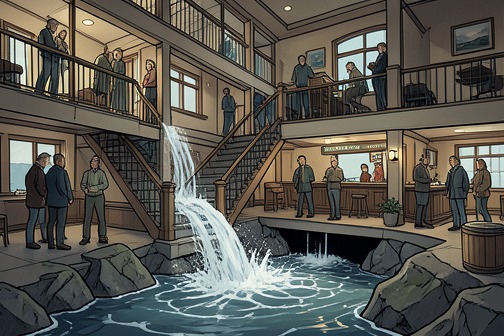
[The Killary fjord flood](entity:event-recall-event-the-killary-fjord-flood-a19900e4d2c2) is the disaster at the [Water’s Edge Hotel](entity:location-recall-location-water-s-edge-hotel-d486fa61f07d) in which rapidly rising water isolates the hotel and forces its residents and guests to shelter upstairs. The flood’s significance lies not only in its threat to life but in the strange social world it produces: a community that initially disregards its anxious outsider eventually responds together, and a working disco becomes a refuge while the water climbs the stairs. The first sign of relief comes through a small change in the water level; for the narrator, that reversal coincides with the return of creative energy and an end to youthful gloom.
## Background and Warning Signs
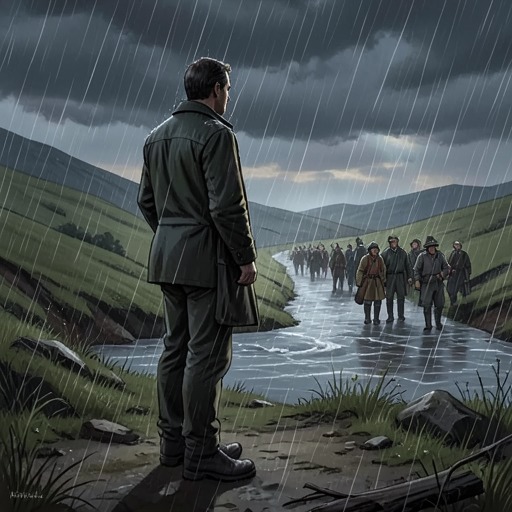
The narrator had bought an old hotel on the fjord of Killary, hard by the harbour wall, with Mweelrea across the water. Eight months into living there, amid skies described as disgracefully grey and rain said to fall 287 days a year, the narrator was already convinced the place might be the death of him. On the night of the flood, exceptionally violent rain set the crisis in motion. The narrator called it end-of-the-world weather, but the lounge-bar regulars ignored the fretful newcomer and listened instead to [John Murphy](entity:character-recall-character-john-murphy-5e9a1a8ffaa7), the local funeral director.
The first signs of danger came from the hillsides: dogs howled in a succession of cries that grew too loud to dismiss. The hotel’s guests and locals went to the windows. The roadway between the hotel and harbour wall had disappeared, and the last evening light took on an unreal green cast. [Bill Knott](entity:character-recall-character-bill-knott-66d4a1daebd7), who had earlier been discussing the route out, now judged that the roads would be impassable. The storm had turned the familiar approach to the hotel into a barrier, leaving its occupants to reckon with the water rather than drive away from it.
## Isolation and Rising Water
The group moved back from the windows in an oddly coordinated manner. People made quiet calls on their mobile phones and spoke in whispers as reports spread along the fjord that the water had risen and breached the harbour walls. Emergency services had been alerted, and sandbagging was discussed, but the response came late. Six of the nine Belarusians joined the people in the lounge bar; the other three had gone to a cinema in Westport. Two elderly couples also joined them after remaining in the library. The narrator offered drinks on the house, acknowledging that they might be stuck there for some time.
The water advanced into the hotel. Janey McAllister was unwell, and Norah Fettle and [Vivien Harty](entity:character-recall-character-vivien-harty-6048b6feb701) tended to her while brandy was called for. At the windows, the group watched water pass the fourth step and sweep over the porch. Lights still shone across the harbour on the mountainside of Mweelrea, then went out. The danger was unusually confined: the fjord was flooding while the rest of the country continued its ordinary Monday evening, watching football or television, putting out bins, and going about domestic life. For those at the hotel, that contrast sharpened the sense of abandonment.
An escape route was considered, including a possible way around Lough Fee toward the N59, but the immediate problem was keeping water out. The Belarusians carried boxes of old curtains down from the attic to block the doorways. As soon as the last box reached the bottom of the stairs, the doors gave way and the waters of Killary entered. The narrator moved everyone upstairs to the function room, used occasionally for weddings. It had a stocked bar and working disco lights, and the group reached it just in time. The narrator followed at the rear, looking back toward the hotel and the darkness outside, then urged the others onward.
## The Hotel Becomes a Shelter
Once upstairs, the narrator switched off the harsh strip lights and turned on the function room’s softer, moving disco lights. The bar opened, and the locals were willing to drink. This was not an evacuation from danger so much as an improvised way to remain together inside it: the room’s wedding and entertainment fittings became emergency resources, while the group waited for news and for the water to stop rising.
The narrator later returned to the function room and proposed having a disco. The group danced through the night to “Chiquitita,” “Brass in Pocket,” and “Summer of ’69,” moving from slow dancing to nostalgic steps and exuberant celebration. The festivity did not mean the danger had passed. The narrator found the six Belarusians sitting on the top stair, with the water halfway up the staircase; objects including footstools, toilet rolls, place mats, and phone books drifted through the lobby below. Back in the function room, the narrator continued serving pints as the flood rose.
The practical means of contacting help then failed: all mobile signals went down, and no rescuers appeared on the horizon. The disco therefore took place without reliable communication or visible assurance that assistance was coming. Its energy and the continuing flood occupied the same night. The function room offered shelter and shared activity, but the stairs kept registering how little distance remained between the group and the advancing water.
## Recession and Personal Reversal
During the night, the narrator went out to check the level and encountered Alexei, one of the Belarusians, who pointed to the water on the stairs with a pleased gesture. It had dropped by a couple of steps. The narrator patted Alexei on the back, winked once, and returned to the disco. The relief was modest and measured against the staircase, not a declaration that the danger was over; nevertheless, it was the first concrete sign that the flood had begun to retreat.
The narrator sets this reprieve against the long life of the inn: it had already been operating in 1648, a year before Cromwell landed in Ireland, and had survived the disaster as well. That perspective shifts the flood from an apparently final catastrophe to one more crisis endured by a place with a history beyond the present occupants. At the same moment, the narrator experiences a sequence of phrases and images as the beginnings of a new idea, followed by a quiet ecstasy. The closing change is inward as well as environmental: the narrator says that the gloom of youth has at last lifted.
## Narrative Significance
The flood moves through sharply contrasted stages: ignored warnings, a lost roadway, failed barriers, retreat upstairs, a party held under pressure, and the first small drop in the water. Its isolation is as consequential as its force. Although the emergency services have been alerted, the hotel group cannot depend on immediate outside rescue; the people present must share space, make improvised decisions, and live with uncertainty together.
The disco gives the crisis its distinctive double character. Familiar songs and old dance steps briefly restore a collective social life, while the water continues rising below and the Belarusians wait on the stairs. The celebration does not erase peril; its value comes from occurring alongside it. When Alexei points out the receding water, a gesture rather than an official announcement becomes the night’s clearest sign of hope. The flood thus marks both a communal ordeal at the hotel and a turning point in the narrator’s perception, ending in survival and renewed creative possibility rather than a simple account of rescue.
Event 4
Donie’s assault by the Garavogue
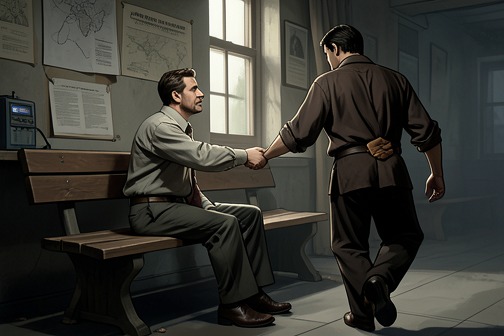
[Donie’s assault by the Garavogue](entity:event-recall-event-donie-s-assault-by-the-52e3707ee9c1) marks a sharp break in an otherwise carefully ordered day: a stranger’s coercion in public leaves [Donie](entity:character-recall-character-donie-d962d500eba4) frightened, unable to follow his routines, and pursued by the encounter in memory as he travels home. The scene makes the gap between visible commotion and recognized danger consequential: people nearby see what they take to be a fight, but no one comes to help.
## The Encounter Beside the River
Donie has finished his biscuits when a stranger sits beside him and addresses him. Donie is already aware of the man’s attention, but the encounter becomes threatening when the man clamps a hand over Donie’s and holds it to the bench. Donie tells him to stop; the man laughs. The control of Donie’s hand turns an ordinary public interaction into a situation in which Donie cannot simply leave.
The stranger’s manner remains unsettlingly casual even as he intimidates Donie. Donie eventually wrenches free and rises, but the man follows alongside him, touches his lower back, and whispers threats. Donie’s attempt to leave therefore does not end the encounter. The man’s proximity and continued contact keep the danger immediate, while Donie’s loud response becomes a means of resisting the words he cannot otherwise shut out.
## The Fall and Its Witnesses
The attack culminates when the man abruptly removes his hand, shoves Donie in the lower back, and trips him. Donie falls onto the riverside pathway. Other people are present, but none steps forward; Donie understands that they interpret the scene as a fight between men. Their inaction leaves him alone with the assailant at the moment when help might have altered the encounter.
The man leans over Donie, calls him “Hyena,” and walks away. The insult returns the word Donie had used to describe the stranger, turning Donie’s own attempt to name the threat into the assailant’s final taunt. The exchange does not resolve the confrontation or restore Donie’s sense of control: the stranger can leave, while Donie must carry the encounter away from the river.
## The Journey Home
After the assault, Donie’s familiar habits fall away. In [Sligo](entity:location-recall-location-aef148cbb57d), he does not pause to look at the mountaineering equipment that usually invites him to imagine snowy peaks, greet the wood carver, or count paving slabs on his shortcut through the arcade. These are not new dangers but ordinary landmarks and diversions that had structured his day; now he passes them without engaging with them.
The disruption continues on the train. Donie misses the departure, the stations along the route, and his usual exchange with the inspector. The repeated thought of the assailant and the word “hyena” interrupts his attention across the journey, replacing the day’s ordinary observations and private daydreams. Even after reaching [Boyle](entity:location-recall-location-3dc931b53e6d), he bypasses a kind man who notices his distress and goes directly home instead of making his customary stop for doughnuts at Supervalu.
At home, Donie hurries along the row of houses, but arrival does not immediately end his distress. The sun has come out, and the glare makes him squint; the feeling persists until the door opens and his mother steps outside at the moment he reaches it. The scene closes on this encounter with her, presenting home and maternal presence as the point at which the assault’s immediate hold may begin to ease, without claiming that its effects are resolved.
## Narrative Significance
The assault’s aftermath is measured through interrupted routine rather than through a general declaration of harm. The mountaineering shop, the arcade, the train, the inspector, and the planned purchase of doughnuts all show what Donie ordinarily attends to; their omission makes visible how thoroughly the encounter has displaced his customary way of moving through the day. Familiar places remain familiar, but Donie cannot inhabit them as he usually does.
The scene also sets the assailant’s direct intimidation against the bystanders’ misreading of events. Donie recognizes the man’s behavior as threatening, while the people around them apparently see only a fight and leave him unaided. That contrast gives the public setting a double character: it offers witnesses, yet their presence does not become protection. The journey home carries that failure of recognition forward, as the encounter continues to shape what Donie can notice, where he goes, and whom he can bring himself to address.
Event 5
Real Ale Club’s Llandudno outing
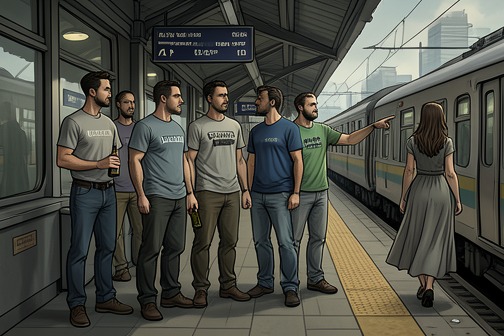
[Real Ale Club’s Llandudno outing](entity:event-recall-event-real-ale-club-s-llandud-72cd6cd8ed76) begins as a hot July excursion in search of good beer and becomes both a small rebellion over how beer should be judged and a quietly painful episode in [Mo](entity:character-recall-character-mo-ce137376e62f)’s life. The day’s convivial rituals—scoring ales, linking arms, and sharing a joke on the train—frame an encounter with Barbara that lifts Mo into hope before the realities of her marriage send him away visibly wounded.
## The outing and the scoring dispute
The club travels from Lime Street on a Saturday in punishing heat, its members reduced to T-shirts as they set out for the [Llandudno](entity:location-recall-location-162aae61dde5) pubs they have been told are worth visiting. The narrator is taking on two jobs in the club, publications and outings, a combination already described as controversial. The party’s journey and shared purpose establish the outing as more than a series of tastings: the members are a close-knit group, with a club culture of its own.
That culture comes into focus when [John Mosely](entity:character-recall-character-john-mosely-ccb945520c2c) calls for a decision about the [National Beer Scoring System](entity:rule-recall-rule-national-beer-scoring-sy-133f12af66a3). The established system rates beer from zero to five: zero means a beer is fit to be returned, while a five is an exceptionally rare distinction, reserved for only a handful of beers across a seasoned drinker’s lifetime. The Merseyside branch has long considered those grades too broad. Its members instead adopted a zero-to-ten scale at a night in Rigby’s, believing finer gradations could capture differences in a beer’s character, from a hoppy note to the mellow effect of oak casking. [Billy Stroud](entity:character-recall-character-billy-stroud-74d66292efce) had argued for decimal scores such as 7.5 and 8.5, but the club drew the line at whole numbers.
The national organisation has responded stiffly to the branch’s continued use of its own scale, and there is talk of losing the charter. The dispute therefore concerns both taste and authority: the members are deciding whether to preserve a local standard they believe to be more discerning, despite the risk of institutional censure. Everett says the club knows its system is better. John Mosely’s agreement settles the question, and the narrator joins the decision to score from zero to ten. Six men link arms on the hot pavement before turning onto the promenade and heading for the Heron Inn, carrying their collective resolve into the day’s next stop.
## Mo and Barbara at the bar
At one of the pubs, the landlady looks towards the group, counts six, and drops a glass. It smashes on the floor as she says, “Maurice?” Mo freezes; then his stare softens, and he answers, “B-B-Barbara?” The encounter changes the atmosphere of the outing. The others watch Mo rise and cross to the bar, where he and Barbara take each other’s hands over the counter and remain wordless for a time. Once they notice the group watching, they giggle. Barbara blushes as she pours the Lancasters, spilling beer into the slops gully, then joins Mo in an absorbed huddle at the far end of the counter.
The club’s first impression is that this reunion has revealed a romantic side of Mo they would not have expected. But the moment is constrained by Barbara’s present circumstances. The landlord greets Mo with polite handshakes and feigned interest, then slips a hand around the small of his wife’s back. John Mosely sternly calls that it is time for the group to finish their drinks. Mo has one last whispered exchange with Barbara; her smile is now fixed, and the landlord remains close beside her. As the party leaves, Mo looks back and calls her name, his voice a note too loud. The brief intimacy gives way to a painful departure without any resolution between them.
## The journey home
Later, Mo arrives at the Ox with terrible scratch marks down his left cheek. He is wordless, staring into the ale placed before him, while the others discreetly signal and decide to return to familiar ground rather than continue on to Henderson’s. The outing has turned from a shared celebration into a day the group must navigate around Mo’s hurt. The scratches are visible evidence of his changed condition, though the account does not explain how he got them.
The group climbs the hot streets towards the station and buys Cumberland Pedigrees, a 3.4 per cent beer that the narrator describes as an easeful drink. On the crowded train, among returning day-trippers, the men sip quietly. Mo slumps as if half dead, but now and then he raises himself for a mouthful. Asked how the beer tastes, he answers, “Like a ten,” and the group laughs. The joke returns the scoring system to the centre of the scene, but in a different register: the scale that earlier expressed the branch’s seriousness now gives Mo a way back into its shared humour. The narrator is reassured by the flicker of his old wit, even as the silence and slumped posture make clear that the reunion with Barbara has not ended happily.
## Significance
The outing’s two central developments turn on competing kinds of judgment. The members argue that beer deserves more nuanced evaluation than the national scale allows; Mo, meanwhile, experiences the difference between a hopeful reunion and a relationship still bounded by Barbara’s marriage. The club can make its preference official through a collective decision, but Mo cannot turn a moment of mutual recognition into a lasting change in Barbara’s circumstances.
The repeated language of scoring draws the strands together without erasing that difference. The zero-to-ten system marks the group’s independence and shared identity; Mo’s “Like a ten” makes that same idiom an affectionate response to the men who have accompanied him home. His humour restores a small measure of companionship, not the romantic possibility glimpsed at the bar. The day thus ends with the club intact around him, while its most intimate encounter remains unresolved.
Event 6
Ernestine and Kit’s child-abduction spree
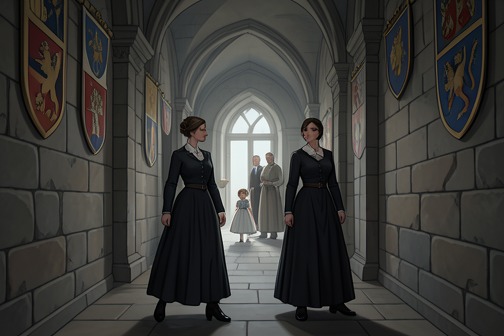
[Ernestine and Kit’s child-abduction spree](entity:event-recall-event-ernestine-and-kit-s-chi-21bb33a422ab) is a pair of increasingly disturbing attempts to take a small child, first at a castle and later from an Asda customer-services desk. The first attempt collapses when Allie’s brother instinctively points out where she is; the second succeeds, only for Ernestine and Kit to decide the toddler is not worth the risk and leave the child beneath hawthorn bushes. Together, the episodes turn the women’s language of tenderness into a chilling instrument of deception and show how their plans combine rehearsal, opportunism, and abrupt abandonment.
## The Castle: An Opening in the Crowd
Ernestine and Kit wait at a distance while a family finishes eating, hoping to have encountered them at the beginning rather than the end of their visit. When the family heads into the castle instead of the car park, the women follow them through its cool passageways and blend into the stream of visitors near the chain mail, heraldic crests, and dark stone walls. The setting offers the turns and sudden twists of a labyrinth, and the child’s parents allow their little girl to wander far enough away that she is briefly forgotten. Ernestine feels a flush rise from her shoulders to her neck as the opportunity takes shape.
The family’s attention fractures further during a quarrel. The father shouts at the boy, absorbed in a video game rather than Ireland’s heritage; the mother scolds the father, and the little girl slips from notice again. Kit tells Ernestine to move. Ernestine takes a tube of wine gums from her bag and approaches with a smile, hoping to bring the child’s warmth briefly into her life. The gesture is an unmistakable blend of appetite and performance: the sweets and affectionate manner make a calculated approach look harmless.
## Allie Discovered, the Abduction Interrupted
The women move from approach to attempted seizure when Ernestine tells Kit to take Allie. Kit draws the girl into an embrace that doubles as a restraint, placing her forearm across the child’s mouth and lifting her close. Ernestine presses Kit forward and urges her to go. At that exact moment, Allie’s brother draws her back into the family’s argument. He instinctively knows where his sister is and points her out, complaining that she is allowed to do as she pleases. The parents turn and see Allie in the arms of the woman with the tight perm.
The mother screams Allie’s name. Kit responds with a practiced emergency maneuver: she pinches the soft flesh behind the child’s knees, making her shriek and cry. The distress gives Ernestine and Kit a plausible pretext to present themselves as concerned strangers helping a lost child. They coo over Allie and talk as though they are calming her and returning her to her mother. Their performance works; the family gratefully thanks them, and the reunion leaves Allie with her parents, still weeping.
The women leave with fond smiles and waves, then turn directly for the car park. They barely get away before the father appears in the rearview mirror’s sightline, too late to stop them. Even if he records the car’s registration, the plates are false, fitted that morning at the garage attached to their bungalow. Ernestine drives at speeds twenty, thirty, and forty kilometres over the limit through [Sligo](entity:location-recall-location-aef148cbb57d), [County Leitrim](entity:location-recall-location-county-leitrim-09333c3de2fa), and County Cavan. They do not let themselves speak until they cross the bridge from Blacklion into Belcoo, using the border and the separate jurisdiction of Northern Ireland as part of their escape. Ernestine then admits that the danger has left her worried about her blood pressure.
## A Second Opportunity at Asda
The spree continues after a stretch of failure. Ernestine and Kit go sulkily through Asda, loading their trolley with screw-top New Zealand Cabernet Sauvignon, frozen mince in five-kilogram packages, and the large kitchen-towel rolls they consume in quantity. The fluorescent glare, refrigerated aisles, piped music, and their tiredness make the shopping trip oppressive; the day seems to confirm that their luck will not turn. Near the customer-services desk, however, an announcement says that a toddler has been found and asks the parents to come forward. The child is panicked. Ernestine and Kit take the opportunity boldly.
Ernestine rushes to the desk and flings herself onto the toddler, while Kit watches her back. Kit knows they may have only a minute, even in a store as vast as Asda. Ernestine soothes the screaming child by describing the incident as a small shock. Kit performs gratitude, and the customer-services worker, pleased to have reunited what she takes to be an odd family and eager to be rid of the screaming child, waves them on. The women exploit the worker’s wish to help and move the toddler away under the appearance of a reunion.
Kit holds the child in a firm lock with her steel-wire arms as the women hurry across the car park, leaving their trolley behind in the air-conditioned aisle. Ernestine guns the Toyota through town. The abandoned groceries and sudden departure mark how quickly the supposed shopping trip becomes a getaway. The toddler is no longer a child briefly separated from its parents but a captive being carried off by two adults who have made a public service desk part of their deception.
## Abandonment and the Pattern of Their Method
In the car, Kit wonders whether they have an itinerant child on their hands. After considering the toddler, the women decide the child is not worth the effort or the risk. The decision changes the episode’s outcome from concealment and flight to deliberate abandonment. Kit lifts the toddler from the back seat, carries the child across a ditch, and leaves it beneath hawthorn bushes beside a lay-by. The women frame the shade as a kindness against the still-hot sun, but that small provision does not alter what they have done: they drive away, relieved to be rid of the child, and head home to their bungalow, whose windbreak pines stand over ground described as adept at hiding things.
As evening wears on, the toddler sits silently beneath the hawthorn, stunned and too exhausted to cry. Midges rise from the lake and feed on the child; a pair of hooded crows stalk nearby, waiting for the toddler to weaken and close sore eyes in sleep. The account’s attention shifts from the women’s hurried calculations to the helpless child they have left behind. That shift makes the final consequence explicit: the pair’s decision to abandon the toddler exposes the child to isolation, insects, and predatory birds, without any assurance of rescue.
Across both attempts, Ernestine and Kit rely on brief lapses in adult attention, friendly talk, and an improvised appearance of care. At the castle, Allie’s brother interrupts the plan before the women can escape with her, and the false plates protect their getaway after they stage a comforting reunion. At Asda, a public announcement and a worker’s relief at resolving the situation give them another opening; this time they leave with the toddler, then discard the child when the risk seems too great. Affectionate names and soothing gestures do not soften the pattern. They are the surface of an opportunistic method whose consequences fall on the children.
Event 7
Steven’s aborted Camden bombing
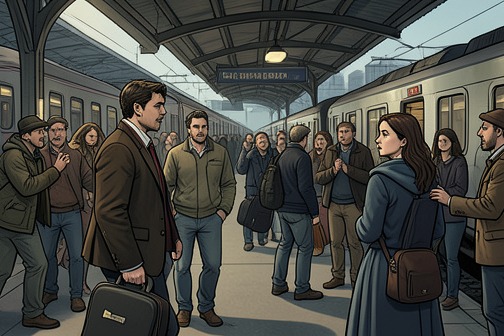
[Steven’s aborted Camden bombing](entity:event-recall-event-steven-s-aborted-camden-25e66d004f6b) is the central reversal in an attempted attack planned for [Camden](entity:location-recall-location-5ebc095456b3) High Street: carrying a light guitar case toward a one o’clock deadline, [Steven](entity:character-recall-character-steven-4e8710990c09) reaches the station area but cannot leave it. A bomb scare involving another young man and another guitar case sends crowds into panic, while Steven hides his own case and keeps an ordinary meeting with a German woman. The sequence exposes the distance between the cell’s political rhetoric and the uncertain, contingent choices through which its campaign is carried out.
## Background and Political Language
The operation belongs to what the narrative calls the mainland campaign, a phrase Steven regards as an insult. As he walks north toward Camden, he objects to the term’s implication that the rest of the United Kingdom is the mainland while Ulster is peripheral; he insists that the language makes his community seem not to exist. The dispute is not simply geographical: the name itself becomes evidence, for Steven, of political exclusion.
[Manus](entity:character-recall-character-manus-2c79dc0592f8) counters that emotional investment will interfere with clear thinking. His instruction is to keep a clear head rather than be driven by feeling, even as his own explanation of the term acknowledges the distinctions the phrase draws. Steven answers that the wording makes them seem nonexistent, and Manus rebukes him for turning the discussion emotional. The episode thus sets the operation’s claimed discipline against the grievance that gives the campaign its vocabulary, without establishing a specific motive beyond what the characters say.
The cell’s composition gives the plan a wider organizational setting. Its members number twelve and come from north Tipperary, south Limerick, and north Kerry; Steven is the one they have chosen. The group regards his bearing and his blood as signs that he is lethal. The account presents this judgment as the cell’s assessment, not as independent proof of Steven’s capacity or as a detailed account of how the group operates.
## The Planned Attack and the Walk to Camden
The action is set for Sunday at one o’clock. In a parallel passage at Tottenham Court Road, Steven carries the case toward Camden and reflects on the name mainland campaign. The case is light, and Manus has told him that striking it against a wall would make no difference: it will go when it is due to go. This exchange establishes the case’s intended role and deadline while leaving its contents and technical workings undescribed.
Steven has slept soundly, and as he walks through a hot, dusty morning, he feels his intention harden. He imagines people across London as dead bodies rising from their beds and pictures distinctive clothes and familiar faces among those who will be in the city. These projections register the anticipated human cost in his consciousness, but they do not provide a count of intended victims or show that he has identified a particular target.
On Camden High Street, Steven stops at a greasy spoon near the Good Mixer and orders a fried-egg sandwich and tea. After two bites he vomits, then treats this as no obstacle: he can pass for another hungover person on a Sunday morning. He walks by the back way to Camden Lock, sits near the noodle stalls with the case at his feet, and waits through the slow minutes toward noon. The ordinary errands and crowded streets hold the operation in suspension; the case remains physically present even as the scheduled moment approaches.
## The Station Scare and the Abandonment
Steven eventually moves back along the High Street toward the station, passing the Electric Ballroom. Camden’s Sunday noise includes sellers calling out designer labels, music from portable speakers, and cars playing dance and hip-hop. At the station, the ascending crowd becomes a roar. Before the planned time, Steven decides he will leave the case for one o’clock, meet the woman outside at half past twelve, and go with her to Regent’s Park by the time it is due to go. His plan is still expressed as an intended attack, but it now sits alongside an alternative future organized around a meeting and a walk.
Near the Kentish Town Road railings, Steven sees a [Metropolitan Police](entity:organization-recall-organization-metropolitan-pol-18ab4857c06a) response unit appear at the top of the elevator. Officers in riot gear have a young goth between them. The crowd breaks apart as the word bomb spreads. The goth is pinned down, the station is cordoned, and people flee into the street; Steven learns that a guitar case carried by the goth has been isolated for bomb disposal. The scare is not attributed to Steven’s case. Its resemblance to his own situation creates a sudden public crisis around another person’s guitar case while his remains concealed from view.
The brief announcement that the young man is Manus does not explain his precise role in the station incident, but it ties the scare directly to Steven’s associate. Steven walks away with the crowd, and the narration notes that the people assessing the situation do not notice how well he fits the profile suggested by their agitation. He walks the length of the High Street again, goes west along the canal, and finds a quiet place beneath a bridge. He hangs the case over the rail but cannot let go. A man across the canal comments on the difficulty of learning guitar; Steven then returns by the path and slips the case behind a bookstall at the Lock.
That final concealment is the decisive action of the episode. Steven does not leave the case at the appointed place and time, nor does he dispose of it in the canal. Instead, he hides it among the Sunday crowd and departs. The narrative establishes that the planned attack is aborted in practice, but does not state what later happens to the concealed case.
## The Meeting and Narrative Significance
Steven is only ten minutes late for the arranged meeting, and the woman looks as good to him in daylight. He says Camden is giving him a headache and suggests taking a bus; she laughs, and he can see that she is taken with him. They go to Hampstead and wait at a coffee shop for a screening of *Wings of Desire*, among other young people dressed in black. The meeting is not presented as a political decision or an explanation for the aborted attack. Its importance lies in the stark adjacency: the case has just been hidden, and Steven turns immediately toward a personal appointment and a film.
The sequence makes a public attack imaginable through Steven’s thoughts, the one o’clock deadline, and the crowds at Camden, then breaks the expected action through hesitation, a separate bomb scare, and concealment. Its turns are concrete rather than triumphant: a case he cannot release, a crowd driven from a station, and a meeting resumed only ten minutes late. The contrast between the political category mainland and the ordinary particulars of a sandwich, a canal path, a bookstall, and a cinema keeps the campaign from appearing as a self-contained abstraction. At the same time, the narrative does not resolve the consequences of leaving the case behind; the immediate outcome is abandonment of the scheduled attack, not a full account of what follows.
Event 8
Daniel’s reunion with Alicia at the Ducks
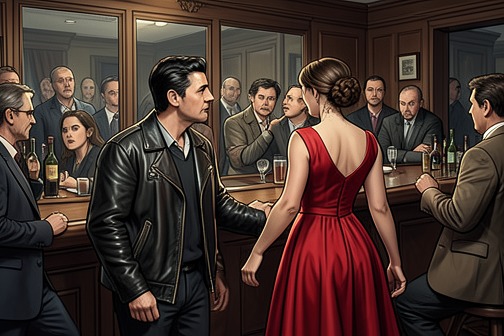
[Daniel’s reunion with Alicia at the Ducks](entity:event-recall-event-daniel-s-reunion-with-a-9b03b57197fa) is a brief, painful meeting in which a supposedly chance encounter makes the past feel present again. In a crowded [Leytonstone](entity:location-recall-location-a64d26ecbed1) lounge, drinking and seeing double, [Daniel](entity:character-recall-character-daniel-ff434f340c88) recognizes [Alicia](entity:character-recall-character-alicia-1f68a746a0ea) as she approaches; she kisses his cheek, but the warmth of that greeting cannot undo the fact that their three-month relationship ended with her taking his heart. She leaves for an outing in Essex, while Daniel turns to the barman to confirm that he has not imagined the encounter. The scene closes not with renewed partnership but with a sober recognition that what they shared cannot be taken away.
## Setting and Encounter
Daniel is alone at the Ducks on a Saturday night. The lounge fills with young people preparing to take a bus to a nightclub in Essex, while he drinks Magners and becomes increasingly intoxicated. After several bottles, he sees double: the shaven heads and pool balls multiply, and the mirrors behind the bar compound the confusion. He shuts one eye to halve the crowd. It is through this blurred field of vision that Alicia appears.
At first, Daniel experiences her approach as an illusion that ought to last only a moment. Instead, she continues through his myopia until she is beside him in his chair. Her arrival is emphatically grounded in place—the lounge of the Ducks in Leytonstone—yet the scene’s doubling makes perception uncertain. Alicia says his name; Daniel opens his closed eye, relieved that the world does not split in two again, and answers with an attempt at casualness. The encounter therefore begins between recognition and doubt: he sees her clearly enough to respond, but not clearly enough to trust his own senses without later asking for confirmation.
Alicia laughs, leans close, and kisses Daniel’s cheek. She says she knew he was somewhere east, expressing surprise at finding him there. The greeting is intimate and familiar, but it does not establish that they have resumed their relationship. Daniel says he is on his own, and Alicia reacts to the prospect of his spending a Saturday night alone. Their exchange brings ease and discomfort together: she can approach him affectionately, while his solitude and her presence expose how much remains unsettled.
## The Past Between Them
The scene gives their past a sharp, compressed shape: Daniel and Alicia were together for three months, and then, in Daniel’s account, she took the heart out of him. That memory explains why seeing her carries more force than the casual setting might suggest. Her cheek kiss is a gesture of closeness, but against the history of the breakup it also marks the limit of what the present encounter can promise. The reunion revives the emotional wound without repairing it.
Daniel’s remark that he is seeing Alicia every day is not literal evidence that they have resumed contact. He describes seeing her come towards him in the street, below him at [Stratford station](entity:location-recall-location-784bace105b2), and in offices. The repeated sightings belong to his experience of absence: although Alicia is physically present in the Ducks, he has been encountering her image in ordinary places, so that the actual meeting seems at once familiar and uncanny. He remains drunk when he says this, and his perception of the room has already been unstable. The scene holds together a concrete reunion and the persistence of a heartbreak that has made her seem continually present.
## Departure and Aftermath
Alicia tells Daniel that she has to go because she is joining the party bus to a disco somewhere in Essex. Daniel points out the painful contrast between the night out and the uncle who is still warm in the ground. Alicia calls him funny, moves in, and kisses his cheek again. Daniel closes his eyes as she does so. The repeated kiss extends the tenderness of their greeting, but her departure remains the decisive action: she says they will see each other around home and warns him to be careful, then leaves for her own plans.
After she has gone, the barman’s response sharpens Daniel’s uncertainty. As Daniel approaches, the barman asks whether he is sure; Daniel asks him plainly whether he has just been talking to a girl. The barman describes the black-haired woman as striking and wonders whether she works in community outreach. Daniel does not take up the question or explain their history. Instead, when the barman proposes half a lager as a better plan than another Magners, Daniel agrees. The exchange establishes that another person saw a woman there, even as Daniel’s need to ask reveals how fragile his confidence in the encounter has become.
Daniel walks home later. The clear sky has clouded over, and the weather is unseasonably mild, but the scene’s final emphasis is not on the weather: there is no denying the past. Daniel recognizes that, whatever else has happened, he once held Alicia, and that experience cannot be taken away. This ending neither restores the relationship nor erases the loss. It gives Daniel a modest certainty—the reality of what they shared—after a meeting that has left the present itself momentarily in doubt.
## Narrative Significance
The reunion works through a reversal between expectation and outcome. Daniel’s blurred vision makes Alicia’s approach resemble an illusion; her face-to-face arrival briefly turns the remembered woman into a present companion. Yet the reunion does not lead to renewed intimacy on equal terms. Alicia offers two cheek kisses and a promise to see him around home, then goes to the disco. Daniel receives contact, not reconciliation.
The scene also makes uncertainty part of the event rather than a problem it resolves completely. Daniel sees Alicia amid doubling, tests his perception by opening his eye, and later asks the barman whether a girl was really there. The barman’s answer supports the reality of the encounter, but Daniel’s questioning reflects how deeply heartbreak has unsettled his sense of her presence. What remains firm is the past: he held Alicia, and that cannot be undone. The ending preserves both sides of the reunion—its brief physical warmth and the continuing separation that gives that warmth its ache.
Event 9
Doctor Sot’s Slieve Bo outreach visit and crash
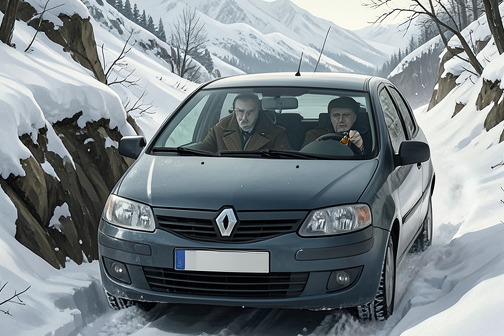
[Doctor Sot’s Slieve Bo outreach visit and crash](entity:event-recall-event-doctor-sot-s-slieve-bo-f5484b0b9e7d) is a winter journey in which a doctor’s attempt to reach an isolated travellers’ camp gradually loses its professional boundaries and ends with his car in a ravine. The journey brings his headaches, whiskey use, and visions into the same frame as his work: he travels as a representative of the [North Western Health Board](entity:organization-recall-organization-north-western-he-9704ff6472c9), but becomes a guest who drinks with the camp and spends the night there after Elizabeth is wrecked. The visit’s final encounter with [Mag](entity:character-recall-character-mag-1152bbeeaaf2), appearing in a mirror, leaves the episode suspended between hallucination and the unexplained.
## Background and Departure
In late January, Doctor Sot’s headaches return. He drinks John Jameson whiskey to keep them in check and hide the naggins in his leather satchel, replenishing them often enough that he varies which off-licence he uses. He believes the piercing winter weather brings on the pain, and that the headaches often presage visions. His eleven-year-old Renault Megane, which he calls Elizabeth after his mother, is a companionable but underpowered presence in the cold; he speaks to it as if it were a trusted companion.
The episode places the journey within a broader picture of Doctor Sot’s medical work and isolation. His afternoon surgery is slow, attended mostly by elderly and fatalistic patients. Among them are people dealing with bereavement, persistent voices, and long-standing distress. His own headaches ease while he is working, but he avoids looking toward the white sky, since skies and mirrors are the settings in which his visions appear. This makes the outreach trip more than a change of workplace: it carries him away from the routines that briefly contain his symptoms and into terrain where his professional role will become less definite.
After prescribing a week of Valium and a new hobby to a patient who describes himself as being in a state of constant excitement, Doctor Sot tells [Sal](entity:character-recall-character-sal-763f70d44d6d) he is leaving on a mission. He calls it outreach, promises to return for tea, and sets off. Sal’s affectionate farewell contrasts with the growing uncertainty of the journey: what begins as an ordinary departure from home will leave him stranded overnight.
## The Route to the Camp
Doctor Sot turns from the main road onto a side road, then follows a boreen that narrows into tracks and finally a rutted half-track. The route climbs into the high country, where his Megane labours. The landscape opens around him: the grey and shale tones of the mountain appear more radiant at close quarters, while turloughs glisten in the valley and gorse holds the bronze colour of winter. The change in scale and setting marks his distance from the surgery and the familiar roads of town.
The travellers’ camp announces itself through barking dogs. Its makeshift structures include tarpaulin shelters, old caravans, a horse trailer with a smoking chimney, a generator set inside something like a teepee, and a rainbow-coloured van. Doctor Sot introduces himself by his full professional name and the North Western Health Board, announcing the purpose of his visit. The young man who meets him gives his name as Joxie and explains that his full title is [Joxie The Rant](entity:character-recall-character-joxie-the-rant-2e99ffc90846). The formal introduction meets an unfamiliar social world, but the travellers do not reject the visitor: they offer him green tea and make room for him in the back of the horse trailer.
## Outreach Becomes Participation
Doctor Sot has not prepared as thoroughly as he thinks he should have. He wishes he had studied the leaflets and learned more of the travellers’ language, but they are friendly despite his uncertainty. His conversation with Joxie includes practical health advice, including a recommendation to eat oily fish such as mackerel for its Omega 3. Joxie answers with a joke about ground control, and the exchange establishes an informal tone in which medical instruction is neither ignored nor treated as a formal consultation.
The visit is not an official outreach session so much as an attempt to break the ice. Doctor Sot takes out a full naggin from his satchel and offers to strengthen the tea, presenting the whiskey as medicinal. That gesture shifts the encounter further from clinical work: the doctor’s hidden supply becomes a means of joining the gathering. Joxie asks whether others know Doctor Sot is out and about, a question that quietly puts his absence from home and the accountability of his mission into view.
When Joxie mentions that a woman has one of her spells on, Doctor Sot asks what he means, but receives no explanation. He drinks to brace himself, then drinks faster. As the travellers come and go from the horse trailer to attend to children and dogs, smoke roll-ups, and sip lager and cider, the visitor becomes less central to their conversation. They discuss dinner, getting the van repaired, and the significance of the number 23. Doctor Sot fetches more Jameson from Elizabeth. The visit’s intended focus on health gives way to the camp’s own rhythms, while the doctor’s growing intoxication makes him increasingly an observer and participant rather than the person directing events.
## Crash and Night at the Camp
As evening falls, Doctor Sot sits in the trailer and drifts in and out of the moment. Someone gives him curried vegetables; he eats, and the food restores his sense enough for him to pick up his satchel and leave. Children, adults, and dogs are gathered around in the dark as he climbs into the Megane. Joxie remarks that the visit has been an education. The group laughs, and Doctor Sot laughs with them until he weeps. Still crying, he starts Elizabeth and drives her immediately into a ravine.
The crash abruptly ends the car’s role in the journey. Doctor Sot sobers at once from the impact, and the travellers help him out. The Megane’s remains smoke in the dark. He retrieves the remaining naggins and the chocolate cake he had bought for Sal but forgotten to give her, then sits on the hard-packed ground with a handkerchief pressed to his bleeding head. His brief lament for Elizabeth and Sal is followed by a feeling of relief like that accompanying the death of an old parent. The car’s wreck is therefore both a concrete consequence of the journey and an emotional release: Elizabeth had carried him up the mountain, but now he has lost the familiar, mother-named companion that had long endured his capers.
There is no immediate ride down. Joxie’s van has no lights, so Doctor Sot must remain until the following morning, when he can be brought down safely. The camp’s mobile phones make small points of light in the darkness. He calls Sal to tell her the bad news about Elizabeth. She is not alarmed that he is stranded on [Slieve Bo](entity:location-recall-location-e83314a81a4c); she is accustomed to his capers and disappearances, including occasions when he has spent days away and woken in ditches. He is shown into one of the rusted caravans for the night. The travellers go to bed early, leaving him among sleeping children and dogs, while he remains awake with a naggin and the untouched cake on his lap.
## Visions and the Episode’s Significance
Unable to settle, Doctor Sot looks at the mirror fixed to a cupboard door. He approaches it cautiously, retreats, then approaches again. At first it is clear and shows no malevolence. On his third approach, a figure appears: Mag, outside the caravan, looking in and smiling. He goes to her. The narrative identifies the serenity of her smile as psychotic, but does not explain the visions or settle whether this encounter belongs to the same category. The mirror, which Doctor Sot already fears as a field of visions, makes the scene a direct return of the phenomenon he has been trying to contain with whiskey.
The episode’s significance lies in the friction between care and impairment. Doctor Sot leaves as a clinician, carrying the name of the North Western Health Board and offering health advice, but brings his concealed alcohol dependence with him. His effort to build trust becomes entangled with drinking; the informal hospitality that welcomes him also leaves him intoxicated, and the crash changes the planned visit into an enforced overnight stay. The travellers help him after the accident and provide shelter, while his wife accepts the disruption as familiar. Neither the outreach mission nor his professional standing protects him from the symptoms and decisions that shape the night.
The final image does not resolve the mystery of [Doctor Sot’s visions](entity:state-recall-state-doctor-sot-8ef3632d8d2e). It moves from the practical aftermath of the crash—the ruined car, the call to Sal, and the need to wait for daylight—to an encounter that again tests the boundary between perception and hallucination. The visit therefore ends not with a completed medical intervention but with Doctor Sot inside a stranger’s caravan, facing a figure in the mirror after the ordinary means of escape have failed.
Event 10
西尔维娅离开帕特里克
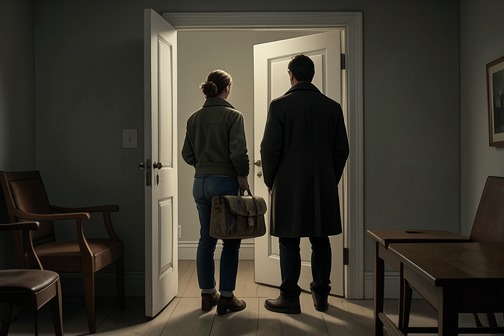
[Silvija](entity:character-recall-character-silvija-4b32dcb634f1)’s departure from [Patrick](entity:character-recall-character-patrick-cc207070a4bb) is a quiet, decisive break: she packs the holdall that has travelled with her, leaves their shared studio, and tells him that he must find a life of his own. Patrick answers with anger, then depression and departure from [Berlin](entity:location-recall-location-berlin-54cb4a75d0f6); six years later, he has neither received a reply to his emails nor reached her by phone. The ending offers no confirmed reunion or definitive explanation. Instead, Patrick preserves a photograph and sustains the belief that Silvija is still somewhere among Europe’s cities, beyond his reach but not erased from his imagination.
## The breakup in the studio
The end comes sharply, as Patrick puts it: one morning he wakes to find Silvija packing. The familiar holdall has already seen plenty, a detail that gives the departure the weight of a life in motion rather than a carefully staged farewell. Patrick tries to sound casual, but recognises fear in his own voice as he asks whether this is really it.
Silvija replies that he knew it was coming. She says the studio has had its time and that she will stay with a girlfriend in Kreuzberg. Her stated reason is not a sudden quarrel: the arrangement has run its course, and Patrick needs to stand on his own two feet. Her instruction that he find his own life makes the separation a demand for independence as well as a departure from their shared home.
## Patrick’s reaction and departure
Patrick’s first response is defensive anger. He tells Silvija to see a doctor, but his account makes clear that the insult covers the injury of being cast aside: he is lost in the city without her and becomes depressed. He stays for a while with other people in Mitte, artists whom he remembers only as seeming to act parts beside Silvija. His comparison shows how thoroughly she remains the measure against which he experiences the people around him.
Patrick comes to feel that the sweet days of summer have passed and that it is time to fly away. Silvija reluctantly accompanies him to the station on the morning he leaves for the airport. She hugs him on the platform, but the embrace is awkward and she flees from it at once. The small, physical exchange gives their separation a final shape: contact occurs, but neither the hug nor the promise to stay in touch restores their former closeness.
## The silence after Berlin
Silvija says she will email and that Patrick can phone. In the six years that follow, however, she never replies to an email or answers a call; after a few months, the phone line is dead. Patrick immediately qualifies what these facts might mean. They signify nothing necessarily, he says, because Silvija changed phones all the time. His qualification prevents silence from becoming conclusive proof of rejection, while leaving the loss itself untouched.
The ending therefore remains unresolved rather than explaining why Silvija stops responding. Patrick must live with both the observable absence and the possibility that it has another explanation. His belief that she is still out there somewhere among the dreaming cities of Europe—perhaps in Trieste, Zagreb, or Belgrade—keeps her life beyond the frame of his account. He insists on remembering her as beautiful, foul-mouthed, and inviolate: an image that preserves her distinctness even as their relationship becomes inaccessible.
## Memory and the shape of the ending
The departure is narrated retrospectively by Patrick, who looks back not only on the breakup but on the years of unanswered attempts that followed it. His account moves from the sudden sight of the packed holdall, through his departure from Berlin, to six years of silence and an imagined geography of possible destinations. The sequence records what happened while refusing the comfort of a final explanation.
A photograph remains sacred to Patrick. In it, Silvija is reflected in the amber of a stein glass, her camera raised; she is blurred, only a shade, but it is all he has left of her. That image makes the limits of his remembrance concrete: he can retain a trace, not recover the person or reopen the relationship. His insistence that Silvija must still exist somewhere in Europe holds hope beside that loss without resolving either one. The break’s significance lies in this enduring separation between what Patrick can preserve—a photograph, a remembered voice, a set of possible cities—and what he cannot regain: Silvija’s presence or response.